
A Masterclass in Deepfakes
12.12.23

This was an event about the proliferation of Deepfakes in our society which has only accelerated due to the recent AI boom. The event started with a keynote by Aman Ibrahim, the founder of Deeptrust.ai, an AI-powered content and identity verification company.
Much of the keynote was about the rise of Deepfakes and where they can show up in our society today; the good, the bad, and the ugly.
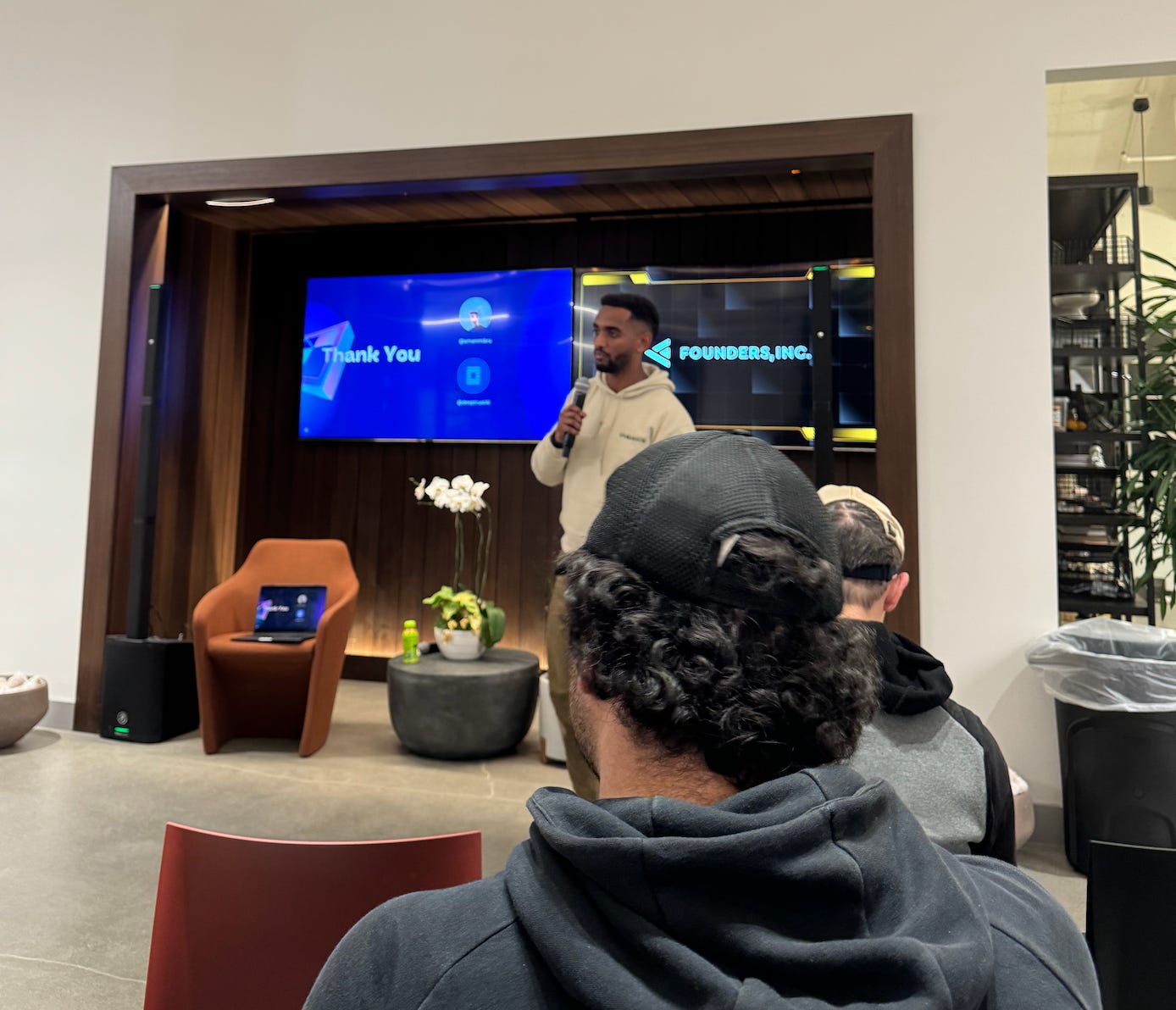
The Keynote
Aman starts off by showing a TikTok video of Oprah and The Rock that was intended to scam.
Then he shows a demo to show how easy (in less than 30 seconds) it is to clone someone’s voice by just singing ABC. Once someone’s voice is cloned malicious things can be done like using that voice to call someone’s parent and saying something like “Mom, I just got a new job and I’m filling out some paperwork. Can you please send me my social security number real quick?
So how can we combat this?
Need to come up with a “keyword” when you hop on a call with someone. There are NO other real alternatives right now.
Using GANs
What is a GAN?
A generative adversarial network (GAN) is a class of machine learning framework and a prominent framework for approaching generative AI. The concept was initially developed by Ian Goodfellow and his colleagues in June 2014. If you’re interested in this stuff, he has a popular book called Deep Learning Book.
GANs are two neural networks competing with each other - in a zero sum game
There is a generator (generates images, audio) and a discriminator (this dictates if something is real or not)
The goal is for both of these networks to take real data and see what is real or fake
GANS are only good at what you teach it. For example if you teach it to do faces, then it does faces and if you teach it with audio then it will get good at audio
GANs in the real world:
The Good:
Ability to generate art
Improve resolution in images (e.g. MRI)
Apple for example can create personal voice (if someone is losing their voice)
Deaging in movies - making actors look younger
AI Dubbing - you can change someones mouth and language (SyncLabs example)
The bad:
Philly attorney sat in front of congress talking about getting a phone call about son getting in car accident and almost getting scammed out of 10k
Altered digital evidence used in UK court
MGM attack that costed $100m in revenue - cyber attack that started with a voice clone
The Ugly:
Misinformation (influencers promoting scams)
The news sometimes can not discriminate between what is real or fake so we get fed fake info
Sexualizing women
“Research report europol reports 90% of online content will be generated by 2026”
How is this different than photoshopping and classic image manipulation?
Cost (time and money) - more accessible now
Variance and realism - way closer with likeness almost 100% copied
Multi-modal - ability to combine audio and image now
Summary on how you can protect yourself: Set up phrases and priotizie in person communication.
The good news is that there’s just as much deepfake detection tech thats growing as there is deep fake tech
Know someone who would benefit from getting notes from AI events in SF?
Have feedback on how I can improve or have additional notes from the event to add?
Thanks for reading AI Notes! Subscribe for free to receive new posts and support my work.